29
A Long Standing Beverage Tradition Sherbet And Sorbet
Sherbet and sorbet are a pronounced example of the contemporary gastronomic approach to the “Eastern-Western” synthesis
![]()
|
Sherbet is a drink which is usually served chilled (though it may also be served warm) and is prepared by combining flowers, fruits, spices, dried fruits and nuts, and similar foods with sweeteners, such as honey and molasses, and water.
Sorbet is, technically, a chilled dessert produced by freezing sherbet to produce crystals of ice. It is also served between two dishes during multiple-course meals in order to cleanse the palate.
While sherbet and sorbet may appear to be close relatives, completely different cultures have sprung up around them.
When carbonated beverages had not yet appeared and during the Ottoman period, sherbet was an important beverage for various reasons and was consumed frequently. Naturally, there used to be a sherbet industry in those days which produced great quantities of sherbet. It wasn’t possible to meet demand by producing fresh sherbet alone. Therefore, several inventions were developed to produce ready-made sherbet. Mass quantities of sherbet were produced thanks to concentrated liquid syrups, pastes, and sherbet powders.
Particularly during the summer months, cooling sherbet was a costly and difficult task. Until the appearance of refrigerator technology, palaces resorted to such preservation methods as snow boxes, ice boxes, snow wells, snow chambers, snow jugs, and snow sacks among others. Besides, the snow that was to be gathered had to be of a certain kind – snow and ice were not gathered just for cooling, but also for the production of food and sherbet.
FROM SNOW HALVA TO SORBET
Snow halva, also known as “karsambaç”, is prepared by mixing molasses, honey, fresh fruit, and fruit syrup with snow. Snow sherbet was also apparently made using this method. Snow sherbet and sorbet produce the same result not because of how they are made, but because of their composition. The Italians staged a massive revolution when they successfully used refrigeration technology to crystallize sherbet. It would be more of a stretch to say that ice cream derives from the sorbet method – its composition is different from sorbet.
Our sherbet culture was unfortunately almost forgotten due to progress. However, some restaurants have started offering delicious sherbets in tiny glasses to customers once more.
Sorbet continues to preserve its place in world cuisine.
JASMINE-LIME SORBET
Ingredients:
15 limes, 2 tablespoons jasmine flower, 1 tablespoon confectioner’s sugar.
Preparation:
Zest and juice limes. Add lime juice, zest, jasmine flower, and confectioner’s sugar to a mixing bowl and mix. Chill at –18 for five or six hours. When lime juice has frozen, crush using a fork. Chill at –18 for five hours again. Serve in chilled cups.
SUMMER FRUITS SORBET
Ingredients:
200 g cherries with stones removed, 200 g apricots with stones removed, 1 slice melon, 1 slice watermelon, 100 g strawberries, 100 g mulberries, 2 peaches.
Preparation:
Remove stones and seeds from all fruits. Blend until puréed, mixing well. Pour into a deep steel basin. Freeze at –18. Once frozen, crush using a fork. Freeze at –18 and mix again. Serve in chilled cups and jug once mixture has reached a flaky, snow-like consistency.
GREEN MEDICINAL SHERBET
Ingredients:
10 bunches arugula, 10 bunches mint, 10 bunches parsley, 5 bunches dill, 5 bunches cress, 6 bunches basil, juice of 15 lemons, juice of 10 oranges, 6 liters watermelon.
Preparation:
Wash all herbs, chop, add water, and then put through food processor… Drain herbs, add lemon and orange juice. Add sugar to taste if desired. Serve chilled
29
Ramadan in The Topkapı Palace
In the Ottoman Palace the month of Ramadan began officially with the spotting of the new moon at the end of the month of Shaban and with a decree by the Chief Judge of Istanbul.
|
Officials in both the palace and state offices celebrated the beginning of Ramadan by extending each other congratulations. When foreign ambassadors learned that Ramadan had begun, they would join this collective joy by sending written messages of congratulations to the sultan, first of all, and to state officials they dealt with. Ramadan was met with great elation in Enderun and the Harem, and iftar (breaking of the fast) dinners would be given for guests every evening until the Night of Qadr.
HUZUR LESSONS
Once Ramadan began, Huzur Lessons would begin in which religious topics would be debated and discussed in the presence of the sultan. It would not be incorrect to define Huzur Lessons as a series of conferences on religious topics chaired by the sultan. Held in a place determined by the sultan, they could take place under the porticos facing the Mermer Sofa of the Holy Mantle, in the Şadırvanlı Sofa or in the Balıkhane Mabeyin-i Hümayun. Generally the subjects of Quranic exegesis, grammar and syntax, and logic were discussed in the Huzur Lessons. It was recorded in the memoirs of Hafız Hızır İlyas Ağa that once it was explained that the whole ummah of Muhammad would enter heaven and that all who listened were happy.
PARS CLEANING
On the 12th or 13th of Ramadan, called Pars, the Room of the Holy Mantle would be cleaned with great respect and with the participation of the sultan. Also the sacred trusts would be moved from the Throne Room to the Revan Kiosk on Pars Day which was participated in by the chief officials of the Treasury, Pantry and Mobilized Wards as well as the private royal rooms. Like the other aghas, the sultan would perform a duty during this transfer and he would personally carry the sacred trusts. Then the Throne Room/Holy Mantle Room would be cleaned with sponges dipped in rosewater and incense water.
INVITATION TO VISIT THE HOLY MANTLE
The Holy Mantle was visited every year on the 15th of Ramadan with the participation of state functionaries with a ceremony that was formerly traditional and made official in the later periods. After the sultan determined the day and hour of the visit to the Holy Mantle, invitations would be sent by the protocol office to those who had the rank to participate in the ceremony. Called invitation certificates, these documents also indicated on what date and at which hour the invited person should come to the Topkapı Place and which uniform and medals he should wear.
HOLY MANTLE VISIT
Coming to the Room of the Holy Mantle at the time of the noon prayer, the sultan would rest there for a while. Then he would command that the ceremony begin. As ordered, the royal attendants, taking the Holy Mantle’s golden chest from its silver stand, would place it on gold thread cushions stacked on one another. The chief of the royal chambers who carried the keys of the Holy Mantle’s first chest opened the chest and green atlas bundles. The two-winged pure gold drawer was opened by the sultan. Just as in holiday and ascension ceremonies, first the crown prince and then the other princes in order of their age visited the Holy Mantle and received a special handkerchief, then passed to the left of the sultan and remained there for the duration of the ceremony.
After that the grand vizier, sheikulislam and other ministers made their visits in order of their rank, and they passed to the right of the sultan. The chief of the royal chambers, the chief black eunuch, the sword-bearer of the sultan, the chief footman, the chief syrup holder and the chief officer of the wardrobe along with the chiefs of the treasury, pantry and mobilized wards all stood behind the sultan.
After each visitor bowed before the Holy Mantle and kissed it, the sultan would hand each of them a handkerchief. After this visit, the pages from the Treasury, Pantry, Falconers, and Mobilized Wards came to visit the Throne Room with their official uniforms; however, the chiefs from the large and small chambers did not make a visit.
After the visit of the state functionaries, the door of the Room of the Holy Mantle facing Enderun would be closed and the iron door close to the Harem would be opened. Upon invitation the wives of the sultan, his favorites, his sisters and his daughters, covering their heads with prayer scarves, would each visit in ceremony. They would leave the room after receiving a special handkerchief from the sultan. After the ceremony was finished, the sultan would talk with his guests and reward them.
NIGHT OF QADR
The Night of Qadr was celebrated with great enthusiasm at the royal palace and in Ottoman states. A lantern event would be arranged on the Night of Qadr at the Tophane Square, and everywhere would be illuminated with lanterns of various shapes and colors. After the Night of Qadr iftar dinners would not be given for guests at either the palace or in large homes; preparations for the holiday would begin.
After press became widespread the handkerchiefs were prepared by the Enderun aghas. Assigned to the preparation of the handkerchiefs, the pages would cut the muslin, stamp it and then, after washing it in the sea, they would dry it. Washed one more time, the handkerchiefs would be starched and ironed, folded and placed in a basket. Because the handkerchiefs (destimaller) were preserved in the Inner Chamber Ward during the final periods, the ward was given the name Destimal Room
29
THE STAR OFAMATEURS IS RISING
From amateurs who have become experts to those who are just curious; from students to teachers of astrology; those coming from Istanbul, Izmir, Bursa, Ankara and Kayseri; those who know one another and those who do not — all are asking the same question: What will we see in the sky tonight?
|
Five years ago my curiosity about space observation which had remained from my childhood re-emerged and I bought my first telescope. I tried to watch things with this telescope from my home balcony or from places I went. Meanwhile I began to gain knowledge of astronomy, but I what I had in mind was to observe the sky in the most suitable place with those who know this subject well and with strong telescopes.
This time when the date and place of the observation festivities organized by gokbilim.com was agreeable with me, I did not miss the opportunity. This group organizes free programs open to everyone who covers his own expenses.
We met in Mustafa Kemal Paşa in Bursa on June 12th for the festivities which would be held in Tırnova, known as one of the best places in Turkey after Antalya for good observation. From amateurs who have become experts to those who are just curious; from students to teachers of astrology; those coming from Istanbul, Izmir, Bursa, Ankara and Kayseri; those who know one another and those who do not — all were asking the same question: What will we see in the sky tonight?
After a warm meeting we reached our 750 meter-high point of observation. Unfortunately my telescope which had stood in the middle of our house more magnificently than the Egyptian pyramids was removed from home as a result of my wife’s objections and I had come here with a small, inadequate telescope. However, the equipment group members had brought made up for this. At any rate, you do not have to have a telescope to join these observations. Members share their binoculars, telescope and remaining accessories with those who do not have any equipment. About fifteen telescopes had been brought; Uğur İkizler presented his 8-inch telescope and Burak Yakut his 10-inch telescope to the service of the curious. Sufficiently large, these two telescopes gave a close to 100-person group the opportunity from time to time to see the captivating beauty of deep space.
I saw the sun!
Towards sunset examining the sun and its eight spots with a telescope with a solar filter was a pleasurable experience for us. With the onset of nightfall and Venus’ reaching a radiance that could be observed, we saw the first prince of darkness. Then Saturn appeared. On the night of June 12th it was a great pleasure to take full advantage of this rare opportunity –even if it tired our eyes- to see many magnificently beautiful formations and heavenly bodies in the sky like the Sombrero Galaxy, the Eagle, Hoag’s Object, and Andromeda galaxies, the Swan, Lagoon and Dumbbell nebulae, the Veil Nebula and the Hercules and Wild Duck star clusters. Especially the Milky Way… This blue path with its edge extending to infinity was brighter and more distinct than I had ever seen. For a long time we watched it with the naked eye and tried to look into its depths with a telescope.
Our lesson is astronomy
There are some forum members whose knowledge has reached the level of expertise. As long as there is no obstacle, they attend every event. They are trying to increase interest in astronomy and the interest of its followers by means of both the web site and the addition to knowledge they make during observation. At the beginning of this observation which was dedicated to Hasip Sönmezalp, the first amateur in Turkey to make his own telescope, Uğur İkizler set up the projector and explained basic astronomical knowledge and equipment to participants and showed photographs of deep space objects. Throughout the observation amateur astronomer Onur Atılgan and astronomy graduate Pelin Öztürk showed the position of the heavenly bodies we followed by means of the pointing lasers in their hands and gave information about their characteristics. As you might guess, this event turned into a pleasurable lesson.
Bursa is waiting for star hunters
Tırnova is a candidate as one of the best places in Turkey for amateur observation. It is close enough to Mustafa Kemal Paşa to facilitate the logistics of participants, but far enough away not to be affected by the light pollution of the district. Actually, the sky here is crowded, rich and beautiful enough to be observed for hours by the naked eye. Teacher and amateur astronomer Eftal Çakır has applied to the District Administration Council to provide certain possibilities for developing Tirnova into an observation area. Who knows, perhaps Tirnova with its transportation advantages, suitable location and magnificent sky can become one of Turkey’s major observation areas for amateurs.
Rocks will rain on our heads
On the nights of August 12-13th there will be a Perseid meteor shower. The route which was turned into a field of waste by the debris left behind by the Swift-Tuttle comet will intersect the Earth’s orbit. With the entrance of this debris into the atmosphere, hundreds of stars will fall throughout the night. Groups formed by universities and amateurs have long since rolled up their sleeves. You can find a group to observe the meteor shower together with the other heavenly bodies at Tırnova or in a spot close to your province. Put the nights of August 12th and 13th on your calendar now and, if the weather is good, do not miss the meteor shower
29
Focused on photography for a long time and on wild life since 2006, Mustafa V. Koç opened his first professional exhibition.
|
With his favorite frames of the exhibition which is the outcome of a three-years effort, Mustafa V. Koç invites you to rediscover Africa.
Two of nature’s most savage together… Both are looking at the objective as if to show which one is more powerful.
Africa presents a photographer the opportunity to catch the hunter and the hunted together. Of course, sometimes the hunter can become the hunted. When it dies, the African lion -which is generally the hunter- can be the most delectable dinner for the spotted vulture.
The most suitable light of the day for shooting photographs… In this shot Mustafa V. Koç generously used the light at his disposal.
29
|
Another World Cup ends with the memories of vuvuzelas, excitement and Spain’s first time victory. Now it’s time to look back and sum up the highlights of the event.
It was probably the most important reflex of his life. He didn’t know what the outcome would be. With tears in his eyes, he headed for the locker rooms. The hero of the game would not be able to see one of the most dramatic moments of the game, or perhaps of the entire history of World Cup. When Asamoah Gyan stood by the ball, tens of thousands of people at the streets of Accra, the capital of Ghana were already celebrating the semi final as Gyan was the best spot kicker of Africa. He has turned two penalty shoots in to goal in previous cup games.
The same moment was anticipated with great excitement in Montevideo, a far away city in another country of another continent… As Gyan’s shoot hit the cross bar and went out, the streets of Uruguay, the champion of the first World Cup ever, became one huge carnival place. The semi final that came during the goal kicks heralded the return of Uruguay to the world soccer scene. With Forlan’s leadership, Suarez’s courage, and with the fray of the defense, but most important of all, with team spirit, Uruguay has left its mark on
the World Cup.
TESTING MARADONA
The debate on if Messi or Ronaldo was the greatest evolved in to another one as Messi’s prodigious performance at Barcelona outshone Ronaldo: Maradona or Messi? As a soccer fan who grew up watching Maradona, I thought this was beyond argument. Messi was surely one of the best players today but Maradona was one of the greatest of all times. He has carried the mediocre Argentinean team once to World Cup championship and once to the final. He has made Napoli, a team no one ever heard before, the champion of Italy and later the UEFA champion. He played in a time when there were players who took the field only to kick him. But every time he played, he set the world on fire.
Coached by Maradona, Argentina was nevertheless the most colorful team of the cup.
Along with its superstars, the team’s every match was a sensation. The injuries of Samuel and Veron and the fact that Messi could not practice before the game because of his flu, had a negative impact on the team’s performance when they were playing against Germany and they gave away the goal at the second minute. During the match he hankered for Cambassio whom he did not invite to play at the tournament. Even so, Germany had to play against an upright rival.
AN OVERALL EVALUATION
2010 did not turned out to be a cup of “superstars” as it was expected. All four teams that played at the semi finals stood out with their fray, cooperation and their attention to the both sides of the game. All four of them were coached by their native technical directors. They were talking to their players in their own language; not with the help of a translator. The players that controlled the pass traffic in all four teams were top flight players in world’s major leagues.
I really don’t want to talk about the referees. And there is no need to recite the final tie. Sometimes the ball passes the goal line and the history writes the name of the champion; no one remembers the second runner up. Sometimes the ball falls behind the line and the best coaches are fired, the greatest players are catcalled. These are the things that we see in every cup. But we don’t hear the crying sound of vuvuzelas in every cup. We don’t witness that many needless disputes on ball positions nor cheering up of control football at every cup. And not all cups are won by the team that deserves it this much…
Think about it: Four years ago the French gave the final game when Zidane was shown the red card. The same French eliminated Ireland to play the final with a goal after a position that Henry had to correct using his hands. While trying to improve its own national league, England could not prevent almost all its goalkeepers to be foreigners. And all these three teams were disappointed at the cup. A giant like Brazil was deprived of superstars such as Ronaldinho, Paro or Adriano, because of the insecurities of Dunga.
WE WEREN’T THERE
And we weren’t qualified… Bringing excitement to every tournament, the new face of the world soccer scene, the Turkish team wasn’t there. The next world cup will be in Brazil. My gut tells me that we will be there, and we will be there to the bitter end… Because a lot of things will change in the next four years. We have overcome our fears and insecurities. We are confident enough to trust our young players with our team. Now it’s time to come up trumps and why not start with Brazil
29
A Summer Classic
The Aegean’s ageless fisherman has kicked off this summer as fast as before. With its blindingly white and boxy houses, shimmering beaches, luxurious venues and colorful nights, Bodrum is – as usual – an essential of Turkish summers
|
Then it comes to summer vacation in Turkey, it has been one of the first places to come to mind. It has been discussed to death. It has been discovered countless times. Each summer, it has added new beauties to its bulging portfolio. It has satisfied backpacking wanderers as well as those who tiptoe at the heights of opulence. Even if it feels drained at times, it has always managed to stand upright. The idiom “Bodrum every night” wasn’t spoken in vain. With its fast nights, deserted trails, tiny natural beaches, and interesting delicacies, it has managed to stay on as a center of attraction for every segment. Now, in your presence: Bodrum.
THE MYSTERY OF ULUBURUN
Bodrum – which was described by the Fisherman of Halicarnassus with the words “Don’t think that you will go as you came; the ones before you were the same; they all went off after leaving their minds in Bodrum” – has a deeply-rooted history dating back thousands of years. According to Herodotus, a native of Bodrum, the city was established in the 1000s AD by the Dorians. Byzantine and Turkish principalities later dominated the area known as Halicarnassus in ancient times. In the era of Suleiman the Magnificent, it was incorporated into Ottoman lands. We begin our quest to discover the region’s historic heritage at Bodrum Castle. The real surprise of the castle, which was built by the Knights of Rhodes, is what the Bodrum Underwater Archeology Museum, housed in its murky corridors.
The most interesting piece in the collection on display at the museum is the Uluburun Shipwreck, one of the world’s oldest known shipwrecks with a history dating back 3,400 years. A golden seal which proves Egyptian Queen Nefertiti’s time as a pharaoh was among the cargo that was recovered from it. After wandering through the castle and along the seaside lined by blue cruise yachts, we move on to the bazaar. It’s hard to leave the counters full of Bodrum t-shirts, leather sandals, handmade glassware, authentic jewelry, sponges, giant seashells, and corals empty-handed. Our destination, which we will reach with the accompaniment of the gentle Aegean breezes that blow off the weariness of the year from our bodies, is the coves of Bodrum.
HOLD YOUR BREATH – WE’RE DIVING
The partying that took place in central Bodrum up until a few years ago has been moved over to the coves. Bodrum’s coves, nearly all of which are Blue Flag certified, are also quite famous for their beach and dockside parties. There are many options for shopping and dining in Torba, which possesses an impressive variety of holiday villages. Gümbet, east of Ağaçlı Cove, is full of hotels, boardinghouses, and holiday villages. Tiny natural beaches are hidden in the cove, which is a popular stopover for tour yachts coming from Bodrum. The next-door-neighbor of Gümbet, Akvaryum (Aquarium) Cove, is an indispensable stop for daily tour yachts. The shores of Turgutreis, which are dotted with tangerine trees, are perfect for watersports. Yalıkavak, famed for its old-fashioned windmills, greets visitors from land and sea with its chic restaurants.
The Yalıkavak Marina nearby, which was built with an eye for detail, offers the highest level of comfort for yachts. The beach clubs in the area turn seaside sun & fun into a sort of open air party with carefully selected music and various offerings of food and drink. Life on the coves is just about the same every day. A day in Bodrum starts with a long breakfast, continues with naps and relaxation at noon, and simmers down with sunshine and bathing in the evenings. With the arrival of dusk, after all the weariness of the day is washed off, it is time to flow in to the restaurants and entertainment venues. If spending time on the beaches of Bodrum is not enough, there are three alternatives which will plunge you into the the cold waters of the Aegean: diving schools, sailing schools, and the blue cruise, which has become permanently associated with Bodrum. Bitez, renowned for its night clubs and the fine sands of its beaches, is the surf and sailing center of Bodrum with its breezy, shallow seas.
There are many places to go diving in Bodrum, which promises an unforgettable experience to divers with its underwater flora and mysterious shipwrecks. Yacht tours are among the most entertaining activities to brighten your vacation. It is up to you to choose one of the blue cruises to the Gökova Coast, the Datça and Bozburun peninsulas, and Marmaris, which are offered on daily, three-day-long, or weekly bases, starting and ending at Bodrum. If you don’t have time for long tours, you can join day trips from Bodrum Harbor. Various grilled foods, fish, and salads are offered at lunchtime on the tours, that stop for swimming at deserted coves.
THE WINDY PENINSULA
Karakaya, standing high between Sandima and Gümüşlük in the vicinity of Yalıkavak, seems to present a view of Bodrum as it appeared a hundred years ago. Baryglia, the ancient town near Güllük, is full of ruins from the Byzantine period. The best place to stop for a delicious snack is Kuyucak Harbor, which has been used as a natural harbor since antiquity. If you’d like to meet the fulfilled, cheerful inhabitants of a modest Bodrum town, you’ll have to mosey on over to Gümüşlük.
There are many options for those who would prefer to have dinner at one of the restaurants on the beach instead of on the yacht. You will have the chance, if you wish, to see the shipwrecks at the bottom of the sea in the lustrous waters of this sterling village, more than two thousands years since the ancient town of Myndos was drowned. Though Gümüşlük doesn’t offer many flashy touristic activities, one can go for a swim, walk to Tavşan (Rabbit) Island, and watch a breathtaking sunset. Mazıköy is also among Bodrum’s little-known, hidden treasures.
This virginal Aegean village, which can be reached by following the road to Mumcular after taking a left at Güvercinlik once you have passed Güllük, is an earthly paradise with its crystal clear sea, green natural environment, stately trees, and rocks. The Mazı beach doesn’t lose its pleasant breeze even on the hottest days of the year. The pleasure of swimming in the shade of oleander trees by these shining, spotless beaches is unbelievable. The long stretches of beach and rocks are quite suitable for sunbathing and fishing. It’s up to you to explore the nearby coves by renting a yacht from the pier on the beach. Stopping by the historical ruins of Kisebükü considered part of tradition nowadays. The cove, which is home to a bath, cistern, and church ruins, is also an essential of blue cruises. The hand-woven rugs and carpets sold at the village square are one of Mazı’s surprises…
ON ANCIENT TRAILS
Isn’t it time to head out to the outskirts of Bodrum? Now, we move on over to Yalıçiftlik, an area of Bodrum whose popularity has risen in recent years. We reach Yalıçiftlik, located approximately 20 minutes from Bodrum by car, after a pleasant trip which winds through the pine forests. Yalıçiftlik, whose hotel and holiday village population has rapidly increased over the past few years, possesses what are perhaps Bodrum’s most beautiful coves. In the first cove after Karaada – the Black Island – there are a few restaurants scattered around a rocky beach preceding the entrance of Gökova Bay. The east side of the shore is a sandy beach.
It’s quite pleasant to swim alone and sunbathe among the deserted rocks just a little bit ahead. Taking long walks on the forested hills overlooking the world-famous panorama of Gökova Bay, participating in yacht tours, and finding serene beaches where you can be alone with your loved ones are among the privileges the region offers to its guests. It’s also not hard at all to stumble upon ruins left over from the Carians. In addition, you can purchase hand-woven rugs and carpets from the houses at the village.
Just four kilometers beyond Yalıçiftlik, Çiftlikköy – literally, “farm village” – is famed for its honey, figs, and masonry houses. In summary, there is something for everybody in Bodrum. Which Bodrum is yours?
“BODRUM IS A BRAND IN BLUE CRUISES”
Mustafa Demiröz (Bodrum Mariners Association President)
Blue cruises first began in the 1950s in Bodrum. We owe the birth of these tours, which are identified with Bodrum today, to the journeys of the Fisherman of Halicarnassus. Bodrum, with its heavenly coves and authentic yachts, is now a brand in blue cruises. The schooners produced by local craftsmen are exported to the whole world. Together with its auxilliary industries, the blue cruise has become a gigantic sector which contributes to the country’s economy. One of the most important touristic contributions by Turkey to the world, blue cruises have a demand from all over the world. We must sustainably protect our coasts in order to ensure the development of the blue cruise. For those who will be going on a blue cruise, I would recommend the Gökova route, which is launched from and ends at Bodrum.
Bodrum’s coves, nearly all of which are Blue Flag certified, are also quite famous for their beach and dockside parties.
The most interesting piece in the collection on display at the Bodrum Underwater Archeology Museum is the Uluburun Shipwreck.
A day in Bodrum starts with a long breakfast, continues with naps and relaxation at noon, and simmers down with sunshine and bathing in the evenings.
HOW TO GET THERE
THY arranges daily, round-trip flights every day of the week from Istanbul to Bodrum, operating out of Dalaman airport on the outskirts of Bodrum.
WHERE TO STAY
Options for accommodation in Bodrum range from boarding houses to five-star holiday villages. Boutique hotels are ideal for those who want to stay in the region’s famed masonry houses.
WHAT TO EAT
Along with delicious Aegean herbs and olive oil based dishes, “çökertme kebab” – literally, collapse kebab, which consists mainly of beef strips, potatoes, and yogurt – is one of the dishes specific to the region. Seafood should, of course, not be forgotten
29
Carrying the name of the undefeatable commander, Alexander the Great of the ancient times, the city is full of reflections of the Eastern Mediterranean’s thousands of years old magnificent past.
If the heat of the sands of the solitary desert warm your heart, and if the attraction of ancient legends and oriental Egypt full of the mystery of the pyramids captures your soul, you definitely should go to Alexandria and brief in the Mediterranean in this city shrouded in the color of the sunset which you won’t be able to take your eyes off. Everyone who sees it understands why Alexander the Great loved this city enough to give you his name. The Egyptians call this beautiful city Alex for short. I am going to do the same. Thank you, Alex, for this journey that enriched my inner world and dreams.
JOURNEY IN TIME
When we decided to see Alex, the beloved of Cleopatra, we found ourselves in the Ramses Train Station in Cairo. (Now, you can directly fly to Alexandria by Turkish Airlines.) The train we boarded with the tickets we excitedly bought at the ticket window is more comfortable and empty than we expected, but this is the only point of departure. Our train carries a significant crowd with those who board at subsequent stations and it is better this way. For I enjoy being among and watching different faces and costumes coming from different places, families, students and farmers. I don’t neglect to look outside.
When I see the lands enlivered by the Nile which gives life to the desert, those working in the fields, shepherds herding animals and children playing in front of their Egyptian rural houses, I am filed with the joy of life. Even though the journey which was said to take three hours takes a little longer, still I can’t get enough. Most of the travelers get off at the Sidi Gaber Station. After that the last stop is the Alexandria Train Station. Suddenly I feel like I am in the midst of a film shot in the middle of the 1900’s. More modern and much cleaner, this journey in time with those around me is fantastic.
DISCOVERING THE CITY
We start off with the taxi we are in. Today the fortress of Mamluk Sultan Kayıt Bey stands where the Pharos Lighthouse, one of the Seven Wonders of the World used to stand, which I had imagined many times since I first saw its drawings. The scent of the Mediterranean which struck my nose when I got out of the taxi is still fresh in my mind.
We enter the fortress as if we were explorers. We climb the steps with tourists coming from all over the world. Alex is located between the East and West Harbors in the shape of the letter “T” and the fortress is on the edge of the right arm of then “T”. Thus, both sides of the city can easily be seen from the top of the fortress.
What impresses me most is the deep blue sea filled with dozens of small fishing boats and white-sailed boats. I can look at this scene for a whole day without ever leaving and even longer if I could stop time. On the other hand, I do not want to make Alex’s other wonders wait too long. Before leaving the Qait Bey Fortress, we enter the Navy Museum next to it. This was restored in 1984 in a Walt Disney manner. Finding its original form and display very interesting, we leave.
ALEXANDRIA LIBRARY
The phaetons we see at the exit give a cause to smile. We prefer them while going to the Alexandria Library. While advancing to the sound of hoof beats, we compare the road to the Izmir’s shoreline. We end the pleasurable phaeton trip that passed by looking at tall white buildings on the right and squares among them where Greco-Roman columns show themselves, magnificent domed Arab style architectural works and, on the left, the sea which is enlivened by small, gentle waves. We are stunned when we see the Alexandria Library standing before the Mediterranean with its exceptional modern architecture.
It is a huge complex, a wonder of design built entirely for knowledge, culture and art. The library has an eight million book capacity, a main reading room of immense proportions, conference halls, museums, art galleries, restoration workshops and a planetarium. With deep respect for knowledge, we bid farewell to this library that was constructed with details that would honor its historical predecessor which was the largest library of the ancient world before it was burned.
As we listen to the call of our hungry stomachs, we found ourselves at the first restaurant we see on the shoreline. After a brief moment of hesitation in choosing from among the delicious, fresh and endless variety of sea products, we begin discussing where we will go while we eat our tasty food.
DOWNTOWN
Our new route is modern downtown. Transportation is very easy. Again passing by magnificent mosques and churches with original architecture, we reach the Al-Hurriyat Boulevard from Midan Tahrir. While walking and looking at display windows in shops on this boulevard, we find local and foreign, big and little brand names of all kinds. There are cafés to rest in and restaurants with Egyptian fast foods from falafel and kusheyri to hamburgers and pizza. The people of Alex are compassionate, warm blooded and talkative; they ask where we come from. When they learn that we have come from Turkey, they please us with compliments like “ahsen’un nas” or “the best of mankind.”
While going down the cordon after the busy downtown, we visit the Abu’l Abbas Mosque, a monument of art constructed for worship. It is Alex’s widest mosque constructed in 1775 with four domes and a high minaret upon the tomb of the famous Ahmed Abu Al Abbas Al Mursi, a prominent 13th century Sufi. Now we are beginning to walk like travelers, not guests, on the streets we have met and blended in all day long.
When we begin to feel tired at every step, we say “it’s time to go to a hotel.” We choose a suitable one from the hotels that can be found in every district and fit every budget. We are met with the same interest and smiling faces that we have seen all day long. The city’s Mediterranean people give us the sense that we are in the Europe of the Middle East. It will be unfair if we return home before seeing some more of Alex so we carefully look into everywhere and make new plans.
OLD DISTRICT
After an elaborate breakfast, we continue our pleasurable tour of the Mediterranean streets in order to be able to see the other beautiful things hidden in Alex, with whom we feel very comfortable with in spite the fact that we just met. Alex was one of the most prominent cities of the Ottoman, Rome and Ancient Greek civilizations just as it is for Egypt today. Unable to be thought of otherwise with its natural beauty, Alex is a center of attraction for today’s history lovers. As individuals curious about history, we also want to see the museums. The Greco-Roman Museum interests us the most. It is located in a very pleasant settlement district.
There are many villas with elegant architecture in the area that are pleasing to the eye. The museum is full of breathtaking historical pieces, sculpture and coins. Of course, the remains of Greek and Roman culture are not just these. Shortly we reach the Greek necropolis in the old district. The walled tombs and art make our heads swirl. This is not just a visit to Alex, but one to ancient civilizations. The close-by Greek Amphitheater immediately draws our attention. Even if the dimensions are not as large as the one in Ephesus, it is still a great cultural heritage reaching us today. One place we can not pass by without seeing is the Pompeii Column on the southern part of an-Nabi Boulevard. After the Greek and Roman works we were amazed by, the sphinxes in the surroundings of the column reclining with their air of mystery remind us that we are still in Egypt.
THE MONTAZAH PALACE AND BEACH
We travel 20 kilometers east to see the Ottoman face of Alex. We find the Montazah Palace in a well kept grove that opens to the sea to the north, adorned with endless varieties of flowers, palm and date trees. It continues to welcome local and foreign visitors with hospitality remaining from the Ottomans. According to what we learned, this beautiful garden is a place where lovers meet and where the locals picnic on Sunday and an indispensable rest area for tourists.
The public part of the palace offers five-star hotel service today. Learning that there are many other luxurious hotels in the Montazah district, we leave ourselves to the cool and refreshing waters of the Mediterranean from the beach of the new hotel we settled into to forget how tired we are. We are happy to have another reason to extend our visit to Alex. Every part of this city is more meaningful than the last and deserves to be seen and lived. Thank you again, Alex, for being this beautiful.
With its young and qualified population Alexandria is one of the prominent cities in Egypt.
A work from the Mamluk Period, the Qaitbay Citadel is a friend of Mediterranean waves.
Alexandria stands out with its ultra modern library which enlivens the memory of the famous ancient library.
One of the city’s most impessing architectural monuments, the Abu Al Abbas Mosque is Alexandria’s largest mosque.
With its old trees, the Al Montazah Park is a city recreational area.
Below: The Qait Bey Citadel is one of the city’s symbols.
It is a lot of fun to enjoy the Mediterranean on the beaches of the city’s modern and comfortable hotels.
HOW TO GET THERE
Turkish Airlines has return flights to and from Alexandria on Mondays, Tuesdays, Thursdays and Saturdays.
WHERE TO STAY
There are various accommodation alternatives at the city center, suitable for every budget. Montazah district is famous with its luxury 5 star hotels. For long term stays, it is advisable to rent a furnished apartment at Sidi Gaber.
WHAT TO EAT
You can taste the fresh and abundant seafood of Mediterranean as well as local dishes like ful, falafel and kusheri. Don’t forget to try sugar cane juice and other fresh fruit juices
18
An accumulation of thousands of years of culture, vast historical wealth, impressive hospitality, admirable architecture, distinguished tastes and a city which has achieved modern standards, Damascus.
“The silent gardens blurred green with river mist, in whose setting shimmered the city, beautiful as ever, like a pearl in the morning sun.” T.E. Lawrence Continue reading “Damascus, the City İlluminated by Civilizations” »
09
Winter is slowly retreating from the East. Spring opens its eyes in May at Ağrı, where a giant of a mountain looks out over the melting snows and the eyes of spring become so many thawing lakes.
09
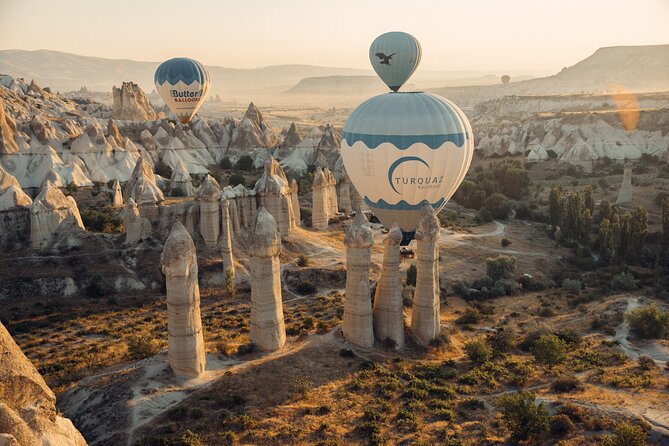
Nothing beats spring. And there is no shortage of reasons to go to Cappadocia. Nature, history, legend, and now art…